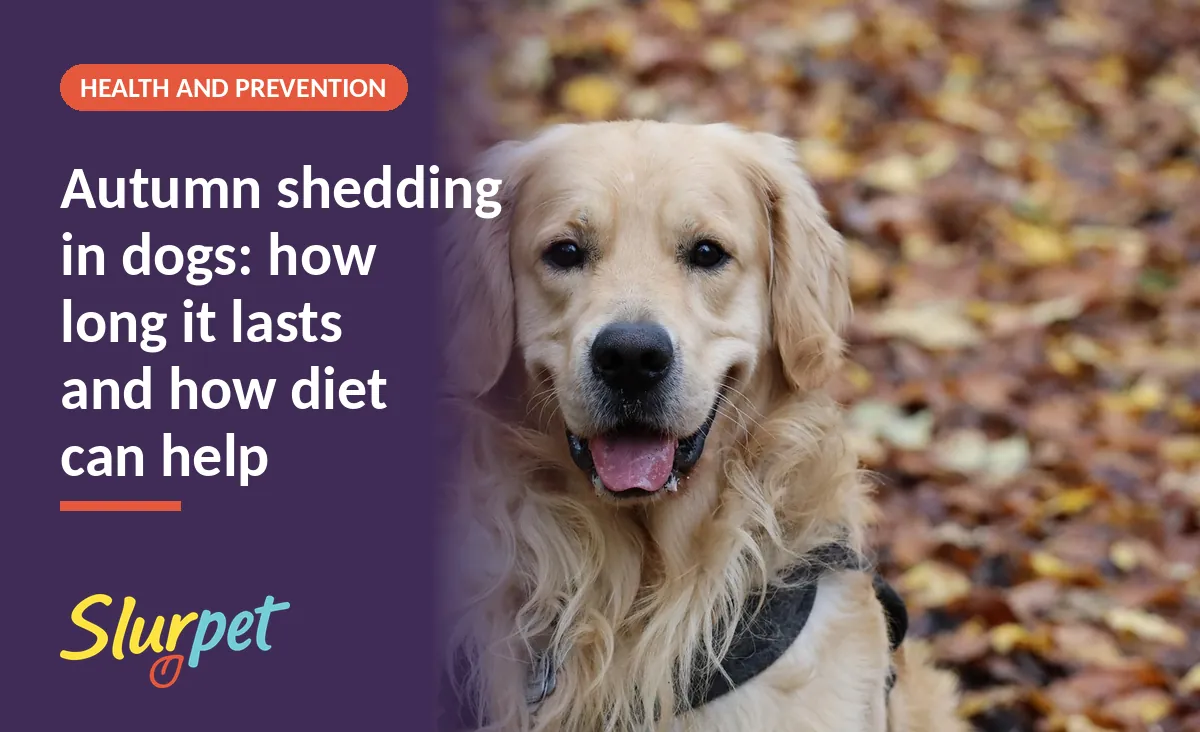
Autumn shedding in dogs is normal: as the days get shorter, many dogs lose their summer coat and grow a thicker undercoat for winter. It usually lasts a few weeks and is most obvious in double-coated breeds. At mealtimes, quality protein, omega-3 and omega-6 fatty acids, zinc and B vitamins all matter. If bald patches, itching or redness appear, it is no longer shedding: it is time to see your vet.
In short
- Seasonal shedding depends mainly on daylight hours and temperature.
- Double-coated dogs, such as Labradors, Border Collies and Australian Shepherds, lose a lot of undercoat in spring and autumn.
- Up to 35% of a dog’s daily protein is used to maintain skin and coat.
- Frequent brushing, even daily during the shedding period, is the most useful thing you can do.
- Bald patches, itching, red skin or heavy dandruff are signs to show your vet.
Why do dogs shed in autumn?
Because the coat follows a growth-and-renewal cycle driven mainly by light and temperature. As vets at VCA Animal Hospitals explain, seasonal shedding is affected by daylight hours and outdoor temperature. In autumn, dogs lose their lighter summer coat to make room for a denser undercoat that keeps them warm.
Dogs that live mostly indoors, with heating and artificial light, may shed a little all year round, with less pronounced peaks. That is normal too.
How long does dog shedding last?
There is no fixed duration: it depends on breed, coat type, age and climate. The peak usually lasts a few weeks, during which hair comes out in tufts, especially when brushing. In double-coated dogs the loss of undercoat, which the American Kennel Club calls “blowing coat”, is particularly heavy.
Dogs with continuously growing coats, such as Poodles, shed less visibly but still need brushing to prevent mats.
Which dogs shed the most in autumn?
It mainly depends on coat type. Breeds with a dense undercoat go through a very visible seasonal shed; those with continuously growing coats barely show it, but need more grooming.
| Coat type | Example breeds | What to expect in autumn |
|---|---|---|
| Double coat | Labrador, Golden Retriever, German Shepherd, Husky, Border Collie | Heavy undercoat shedding for a few weeks |
| Short coat without a dense undercoat | Boxer, Dobermann, Smooth Dachshund | Moderate shedding, more constant through the year |
| Continuously growing coat | Poodle, Bichon Frisé, Yorkshire Terrier | Little hair around the house, but mats form without brushing and grooming |
| Wire coat | Schnauzer, many terriers | Dead hair stays in the coat and must be removed with specific grooming (hand-stripping) |
Even within the same breed there are differences: age, hormones, health and lifestyle all affect how much and when a dog sheds.
Puppies and senior dogs: is shedding different?
Yes. During the first year, a puppy replaces its soft puppy coat with an adult coat. This gradual change can overlap with seasonal shedding and make hair loss look heavier than usual. Brushing often from an early age gets the puppy used to the brush and makes coat care easier for years to come.
In senior dogs the coat tends to become drier, thinner or duller, and regrowth can be slower. This is not always a problem, but a sudden change in an older dog’s coat deserves a check-up: some hormonal diseases, such as hypothyroidism, show up precisely as sparse hair and dry skin. At routine vet visits, ask for the skin and coat to be checked too.
How can you support your dog’s coat through diet?
Hair is made almost entirely of protein. According to VCA, up to 35% of the protein a dog eats each day is used to maintain skin and coat. That is why, during shedding, the quality of the diet matters more than the quantity.
The nutrients that make a difference:
- High-quality, digestible protein: the raw material for new hair.
- Linoleic acid (omega-6): maintains the skin barrier and a soft coat.
- EPA and DHA (omega-3): help control inflammation and add shine.
- Zinc: essential for skin cell renewal.
- Biotin and B vitamins: support fat metabolism in the skin.
A good-quality complete food already contains these nutrients at the levels set by the European FEDIAF guidelines. There is no need to increase the portion: more food does not mean more hair, only more weight. If your dog’s coat has been dry or dull for a while, there are foods formulated for skin and coat, which you will find under Coat health support for dogs and Skin care support for dogs.
Omega-3 supplements or other specific products only make sense in some cases: discuss them with your vet, who can tell you whether they are needed and in what amount.
How can you tell if the diet is helping the coat?
The coat is a faithful mirror of diet, but results take time: new hair takes weeks to grow, so a change of food should be judged after at least a month, not after a few days.
A few simple checks:
- Read the label: for daily meals choose a food labelled “complete feed”. Treats and “complementary” foods alone do not cover every need.
- Follow the recommended amounts: label quantities are given by weight; adjust them to your dog’s activity and body condition.
- Look at the coat: a shiny, soft coat and skin without dandruff are good signs. A dull, rough coat or hair that struggles to grow back, if it lasts, should be discussed with your vet.
- Don’t pile on extras: table scraps, toppings and DIY supplements can unbalance a diet that is already complete.
- Fresh water at all times: good hydration helps the skin too, especially once the heating is on.
How do you manage shedding at home?
The brush is still the most effective tool. Removing dead hair reduces what ends up on sofas and floors and lets the skin breathe.
- Brush often: at least 2–3 times a week, daily during the shedding period.
- Use the right tool: an undercoat rake or steel comb for double-coated dogs, a soft brush for short coats.
- Do not shave double-coated dogs: the American Kennel Club advises against it, because undercoat and topcoat grow back at different rates and the coat loses its insulating function.
- Bathe in moderation: use dog shampoo only and dry thoroughly, especially once it turns cold.
- Check the skin while brushing: it is the best moment to spot fleas, ticks, scabs or redness.
How can you reduce hair on sofas and clothes?
- Brush your dog outdoors or on the balcony, so dead hair stays outside.
- Cover the sofa and your dog’s bed with washable throws and wash them often during the shedding season.
- Vacuum more often, ideally with a pet-hair brush and an efficient filter.
- Keep a lint roller or rubber glove to hand: they lift hair off fabric in seconds.
- Wash beds and mats regularly: as well as hair, they remove dust and dander.
When is hair loss not shedding?
Shedding is even and does not bother the dog. According to the Merck Veterinary Manual, hair loss becomes a problem when obvious bald patches or other skin changes appear.
| Normal shedding | Signs to show your vet |
|---|---|
| Hair comes out evenly, especially when brushing | Bald patches or symmetrical hair loss on the flanks |
| Healthy skin, no redness | Red, thickened or scabby skin, or colour changes |
| The dog does not scratch more than usual | Itching, constant licking, pain |
| Limited period in spring and autumn | Hair loss that lasts for months or gets worse |
| Lively dog with a normal appetite | Tiredness, weight gain, excessive thirst |
Causes can include parasites, allergies, skin infections, nutritional deficiencies or hormonal problems such as hypothyroidism. Only your vet can find out which and recommend treatment.
Frequently asked questions
How often should I brush my dog while shedding?
During the peak of the shedding season, every day or nearly every day. For the rest of the year, 2–3 times a week is usually enough, depending on the coat.
Will changing food stop shedding?
No, shedding is a natural process and no food eliminates it. A complete, high-quality diet does help new, healthy hair grow. If you change food, do it gradually over 7–10 days.
Does bathing help remove dead hair?
It can help, if followed by thorough drying and a good brush. Do not bathe too often, so the skin does not dry out.
Do indoor dogs shed too?
Yes, but often less markedly: with artificial light and heating they may shed a little all year round.
Are there dogs that don’t shed?
No dog is completely shed-free: even breeds with continuously growing coats lose hair, it simply stays trapped in the coat instead of falling around the house. That is why they need regular brushing and grooming.
This article is for information only and does not replace your vet’s advice.
Slurpet products for coat care
To support your dog through the shedding season, Slurpet offers complete foods designed for skin and coat, with quality protein and omega-3 and omega-6 fatty acids.
- Purina Pro Plan Medium & Large Adult 7+ Sensitive Skin with salmon: for adult and senior medium and large dogs with sensitive skin.
- Monge BWild All Breeds Adult duck with potatoes: kibble for adult dogs of all sizes.
- Purina Pro Plan Medium Puppy Sensitive Skin with salmon: for medium-sized puppies, including while their coat changes.
- Monge VetSolution Dermatosis: a veterinary diet, to be used only on your vet’s advice.
See the full range in Coat health support for dogs, Skin care support for dogs and, for supplements to discuss with your vet, Skin and fur.
Read also: Nutrition and wellness: how food affects hair, digestion and energy · Most common dog and cat feeding mistakes